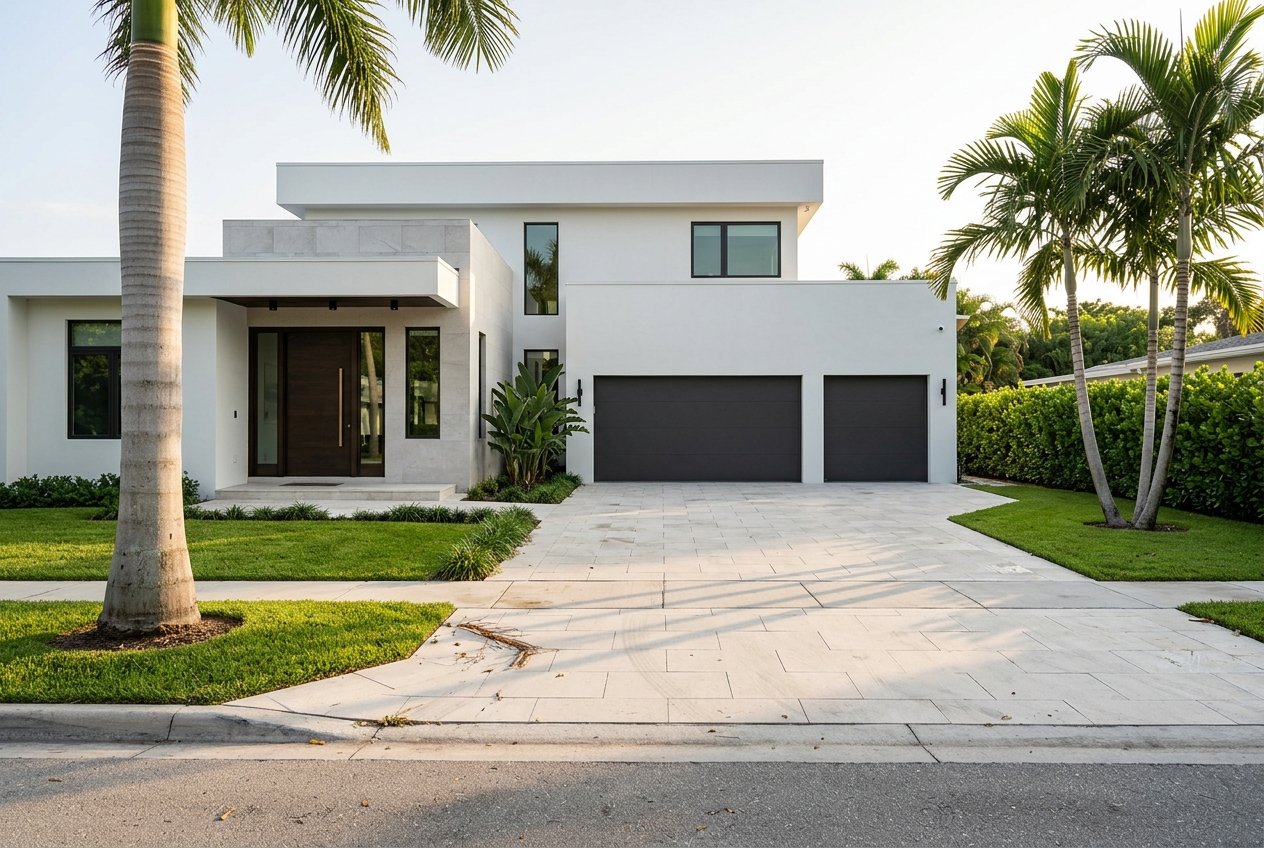
Parkland Or Nearby Suburbs? How To Choose Your Fit
You do not have to choose the “best” suburb in Broward. You have to choose the one that fits how you actually live. If you are weighing Parkland against nearby suburbs, you are probably trying to balance home style, commute, daily convenience, and overall feel without making a rushed decision. This guide breaks down the trade-offs clearly, so you can compare Parkland with nearby options and narrow in on the right fit for your next move. Let’s dive in.
When buyers compare Parkland to nearby suburbs, the decision usually comes down to four things: housing form, amenity mix, commute geometry, and community vibe. Those factors shape your day-to-day experience more than a city name ever will.
Parkland is a strong baseline because it offers a peaceful suburban setting with extensive community amenities. The city includes the Parkland Recreation and Enrichment Center, a citywide trail and park network, Wedge Preserve Park, the Equestrian Center at Temple Park, and Barkland Dog Park. If that sounds close to what you want, Parkland may stay at the top of your list.
Parkland tends to attract buyers who want a neighborhood-first setting. The city’s housing stock still reads as heavily single-family, with a city stormwater study noting that about 87% of dwelling units are single-family homes.
That matters if you want a more traditional suburban feel with detached homes playing the lead role. Parkland’s land-use framework does include townhomes and multifamily residences, but the overall impression remains much more single-family than mixed-use.
Another part of Parkland’s appeal is how it functions day to day. Commute patterns are largely corridor-driven rather than transit-driven, with major routes centered on roads like Loxahatchee Road, Parkside Drive, Holmberg Road, Nob Hill Road, University Drive, Hillsboro Boulevard, and U.S. 441/SR 7.
In practical terms, that setup often works well if you prefer quieter internal neighborhood streets and are comfortable using a limited set of main roads for most trips. If you want calm neighborhoods and strong park access, Parkland checks that box well.
Weston is often the closest comparison for buyers who like Parkland’s polished, planned feel but want stronger regional connectivity. It is a master-planned city with 15 park and recreation facilities, a large park system, and scenery shaped by lakes and canals.
The big difference is access. Weston’s geography includes direct access to I-75 and I-595, along with connections to the Turnpike and I-95, which can make regional travel feel easier for some households.
If your routine includes regular trips across Broward, to Fort Lauderdale, or toward Miami, Weston may move up your list quickly. The city notes approximate drives of about 25 minutes to Fort Lauderdale-Hollywood International Airport and Port Everglades, 27 minutes to downtown Fort Lauderdale, and 35 to 42 minutes to Miami destinations.
Housing in Weston still leans single-family, though it has more multifamily presence than Parkland in some areas, including near Weston Town Center. If you want a similar level of planning and amenities with stronger expressway access, Weston is a very logical alternative.
Davie offers a very different personality. Instead of a more uniform master-planned feel, it is known for a rural atmosphere, western-themed identity, equestrian lifestyle, and more than 165 miles of trails.
That gives Davie a more character-driven feel than Parkland. Its trail system also links residential communities with open space, parks, and other community destinations, which creates a different kind of daily experience.
If you want more land, a less uniform streetscape, or a community with a distinct identity, Davie deserves a closer look. The town also points to strategic access near the Turnpike, I-595, and I-75, along with quick access to Fort Lauderdale-Hollywood International Airport and Port Everglades.
In short, Davie can be a strong fit if Parkland feels a little too planned or if you want a more spacious, personality-rich setting. It is a different kind of suburb, and for the right buyer, that is exactly the point.
Coral Springs makes sense if you want suburban space but also want more choices in housing type and more convenience built into daily life. Compared with Parkland, it offers a broader housing mix.
Its comprehensive plan supports everything from low-density acre-lot single-family homes to townhouses, attached housing, cluster homes, zero-lot-line homes, and higher-density residential near arterials and commercial areas. That wider range can be helpful if you are still deciding between a detached home, townhouse, or another format.
Coral Springs also brings a stronger service and amenity profile for everyday living. The city maintains 49 parks, operates a free community shuttle with Broward County Transit, and is building a downtown mixed-use core at Cornerstone Plaza that includes luxury rental apartments, dining, retail, and a museum component.
If you like the general suburban geography of northwest Broward but want more built-in convenience and more housing flexibility than Parkland usually offers, Coral Springs is worth serious consideration.
Coconut Creek is one of the more mobility-oriented and mixed-use nearby options. Its Vision 2030 plan calls for a housing mix that includes apartments, condos, single-family homes, and townhomes.
That broader mix gives Coconut Creek a different day-to-day feel from Parkland’s more single-family-heavy pattern. It also positions places like MainStreet as hubs for shopping, dining, and cultural activity.
The city operates two free community bus routes and the Butterfly Express trolley along Lyons Road. For some buyers, that creates a more service-rich local experience for errands and short trips.
Coconut Creek also has a strong parks and greenway system, but the feel is greener in a more compact, mixed-density way. If you want more of a blend between suburban living and everyday convenience, Coconut Creek may fit better than Parkland.
Boca Raton is the outlier in this comparison because it brings in an entirely different lifestyle driver: the coast. The city highlights five miles of Atlantic coastline, 49 parks, and 1,650 acres of recreation space, along with a downtown and cultural identity shaped by Mediterranean Revival architecture.
That means Boca is not really trying to be Parkland. It appeals to buyers who place a higher value on beach access, downtown energy, and a more coastal setting.
Boca also offers transportation resources that include shuttles and transit through services like Boca Connect. If your ideal routine includes access to the beach, a more active downtown environment, and a stronger coastal identity, Boca becomes a much more relevant benchmark than Parkland.
For buyers who want inland neighborhoods, a single-family-dominant environment, and a quieter internal feel, Parkland usually remains the better fit. For buyers chasing coastal access and more urban energy, Boca often rises to the top.
If you are stuck between Parkland and nearby suburbs, try filtering your decision through a few practical questions. The goal is not to compare everything at once. It is to identify what matters most in your daily routine.
Ask yourself:
| Area | Best For | Key Trait |
|---|---|---|
| Parkland | Buyers wanting a quiet, single-family-focused suburb | Neighborhood-first feel with strong parks and trails |
| Weston | Buyers wanting a Parkland-like feel with easier highway access | Strong regional connectivity |
| Davie | Buyers wanting space and personality | Rural and equestrian character |
| Coral Springs | Buyers wanting more housing options and convenience | Broad housing mix and service density |
| Coconut Creek | Buyers wanting mixed-use living and local mobility | Compact, green, and more connected feel |
| Boca Raton | Buyers prioritizing beach access and downtown energy | Coastal lifestyle |
Here is the core decision: the more urban, mixed-use, or coastal the alternative becomes, the less Parkland-like it will feel day to day. That is not good or bad. It just helps clarify what you are really choosing.
If your priority is a single-family-dominant suburban environment with parks, trails, and a quieter internal street network, Parkland remains one of the clearest fits in this part of Broward. If your priority shifts toward convenience, access, variety, or coastal lifestyle, nearby suburbs may align better.
That is where local guidance matters. If you want help comparing Parkland with Weston, Davie, Coral Springs, Coconut Creek, or Boca Raton based on your price point, commute, and home goals, connect with Roman Pavlik - Heron Bay/Parkland for a focused, local conversation.
I bring decades of luxury real estate mastery, guiding clients through high-end transactions with precision and discretion. With a proven track record of $87M+ in closed sales and expertise in properties up to $10M, I deliver results-driven, personalized service. Partnering with me means access to exclusive opportunities and elite market insight tailored to your goals.
Roman Pavlik
Roman’s Address 8064 NW 124th Ter Parkland FL 33076